Fear and trust guide
Why Is My Cat Scared of Me?
A cat who seems scared is communicating that something feels unsafe or unpredictable. The most useful first move is to reduce pressure, give them more space, and rebuild trust through calm, repeatable experiences.

Common reasons a cat may be scared of you
Fear is not a verdict on your relationship. Your cat may be new to you, adjusting after a move, responding to past handling, or reacting to something that feels fast, loud, or hard to predict.
- You are new to each other. A recently adopted cat has not yet learned your routines.
- Past experiences felt unsafe. History can shape how quickly a cat expects people to be risky.
- Movement feels threatening. Reaching from above, direct staring, looming, or quick steps can feel intense.
- Handling has become predictable. If approach often leads to restraint, a cat may avoid the approach itself.
- Health has changed. Pain, illness, or sensory changes can make a previously comfortable cat pull away.
Fear that appears suddenly deserves extra attention
A sudden behavior shift, especially with reduced appetite, hiding, sensitivity to touch, or signs of illness, calls for a veterinarian. Do not assume a fearful response is purely behavioral when pain or a medical condition could be involved.
How to tell if your cat is afraid
Fear may look like hiding, freezing, a low or tense body, flattened ears, wide eyes, a hard stare, defensive hissing, swatting, or a quick retreat. Treat these as information, not disobedience. A cat that runs away before you reach them may be anticipating something that has felt too intense.
That pattern has its own practical solutions in our guide to cats who run away when you approach.
What to do when your cat is scared of you
1. Stop pursuing interaction
Do not follow, corner, or pull your cat from a hiding space. Let the cat keep an exit and allow their body to settle.
2. Increase distance
Work from the distance where your cat can notice you without escalating. Sit lower, turn slightly sideways, and let them watch.
3. Make routines predictable
Keep meals and daily care consistent. A quiet pattern gives a cat something safer to expect.
4. Pair your presence with good experiences
Place food, toss a treat, or offer a wand toy without asking your cat to come closer than they want.
5. Let the cat choose the approach
When your cat closes distance, respond gently and briefly. Do not turn one approach into forced petting or pickup.
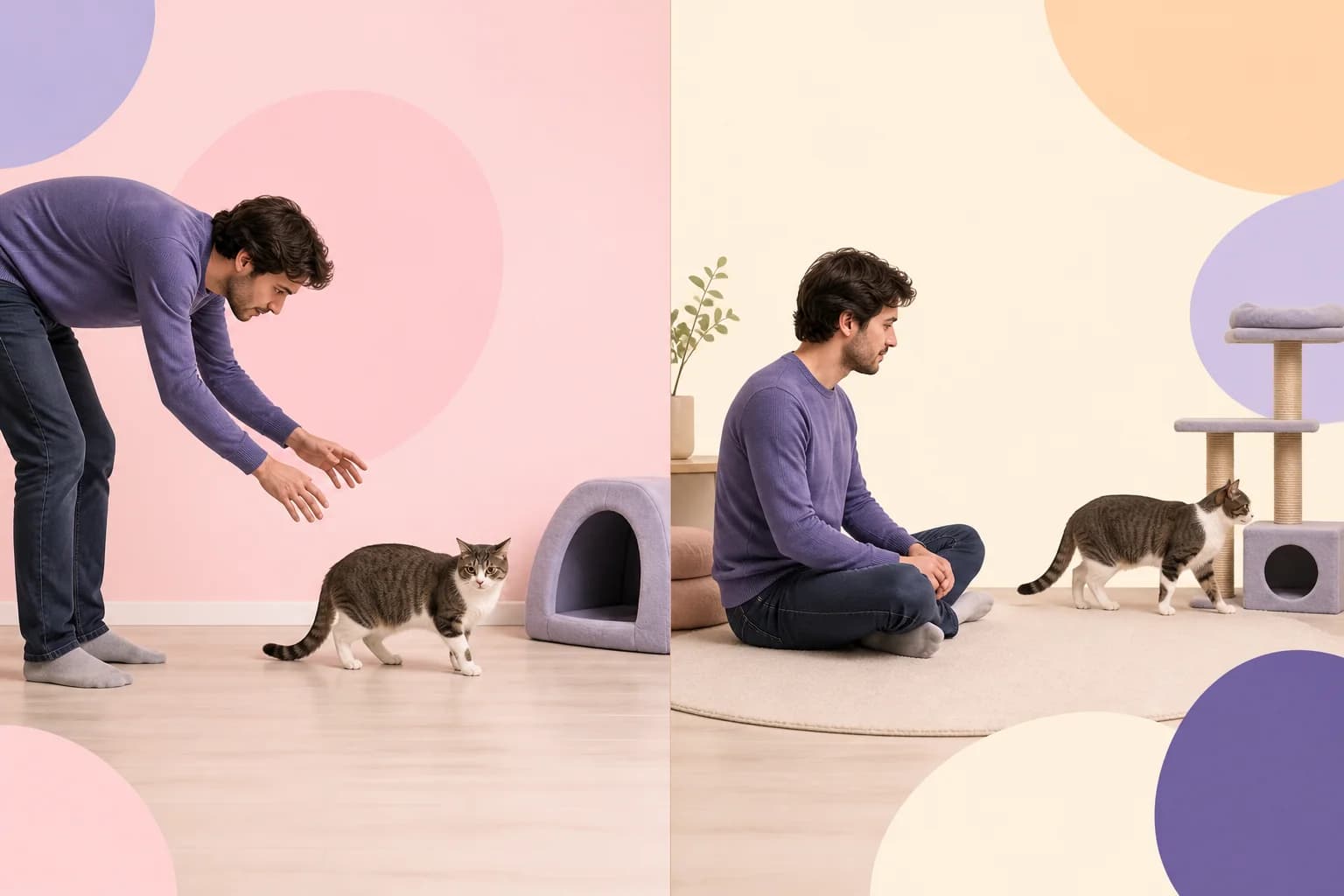
What not to do
Avoid trying to prove that nothing is wrong by moving closer, holding the cat until they settle, or making them face a feared situation. It can also help to skip direct eye contact and hands reaching over the head. Calm distance is not giving up; it is the beginning of a safer pattern.
How to rebuild trust
Once the immediate pressure is lower, use a steady progression of safety, predictability, positive associations, voluntary proximity, play, and then touch when ready. Our detailed guide on how to get a cat to trust you walks through that sequence.
For a new arrival, do not mistake hiding for a refusal to bond. Start with what to do when a new cat is hiding and make their refuge part of the plan.
How long can fear take to improve?
There is no fixed answer. The trend matters more than the calendar: does your cat eat with you nearby, recover sooner after a sound, play more often, or choose to remain in the room? Those are meaningful changes.
Frequently asked questions
Why is my cat scared of me but not other people?
Cats can connect fear with a particular movement, voice, routine, or handling history. Focus on making your own interactions quieter and more predictable.
Should I ignore a scared cat?
Give them space, but do not disappear from their world. Quiet, predictable presence at a comfortable distance can be more helpful than total avoidance.
Will a scared cat ever become affectionate?
Many cats become more comfortable over time. Let your cat define the pace and form of closeness instead of treating affection as the only successful outcome.