Cat socialization guide
How to Socialize a Feral Kitten
Socializing a feral kitten means gradually helping them associate people with safety, food, play, and choice. The process works best when you move at the kitten's pace and build trust in small, repeatable steps.

What socializing a feral kitten actually means
Socialization is not about making a frightened kitten submit to handling. It is the gradual work of helping them feel safe enough to observe, choose, and eventually interact with people. Fear can look like hiding, freezing, hissing, or swatting; those signals deserve space, not punishment.
Every kitten arrives with a different history. Their age, prior contact with people, health, temperament, and environment all shape the process. The consistent thread is trust: when a kitten learns that you notice their boundaries, they have more room to become curious. The broader principles are explained in our cat socialization guide.
Start with a safe refuge
Begin in a quiet, controlled room with a comfortable hiding place, water, food, and a litter box. Keep the setup predictable and make sure the kitten can retreat without being chased or repeatedly pulled from hiding.
- Offer a covered bed, carrier, or box with an easy exit.
- Keep food, water, and litter in reliable places.
- Limit visitors and loud activity at first.
- Let the kitten watch their new surroundings from a place that feels protected.
A refuge is not a setback. It is the base that makes later exploration possible.
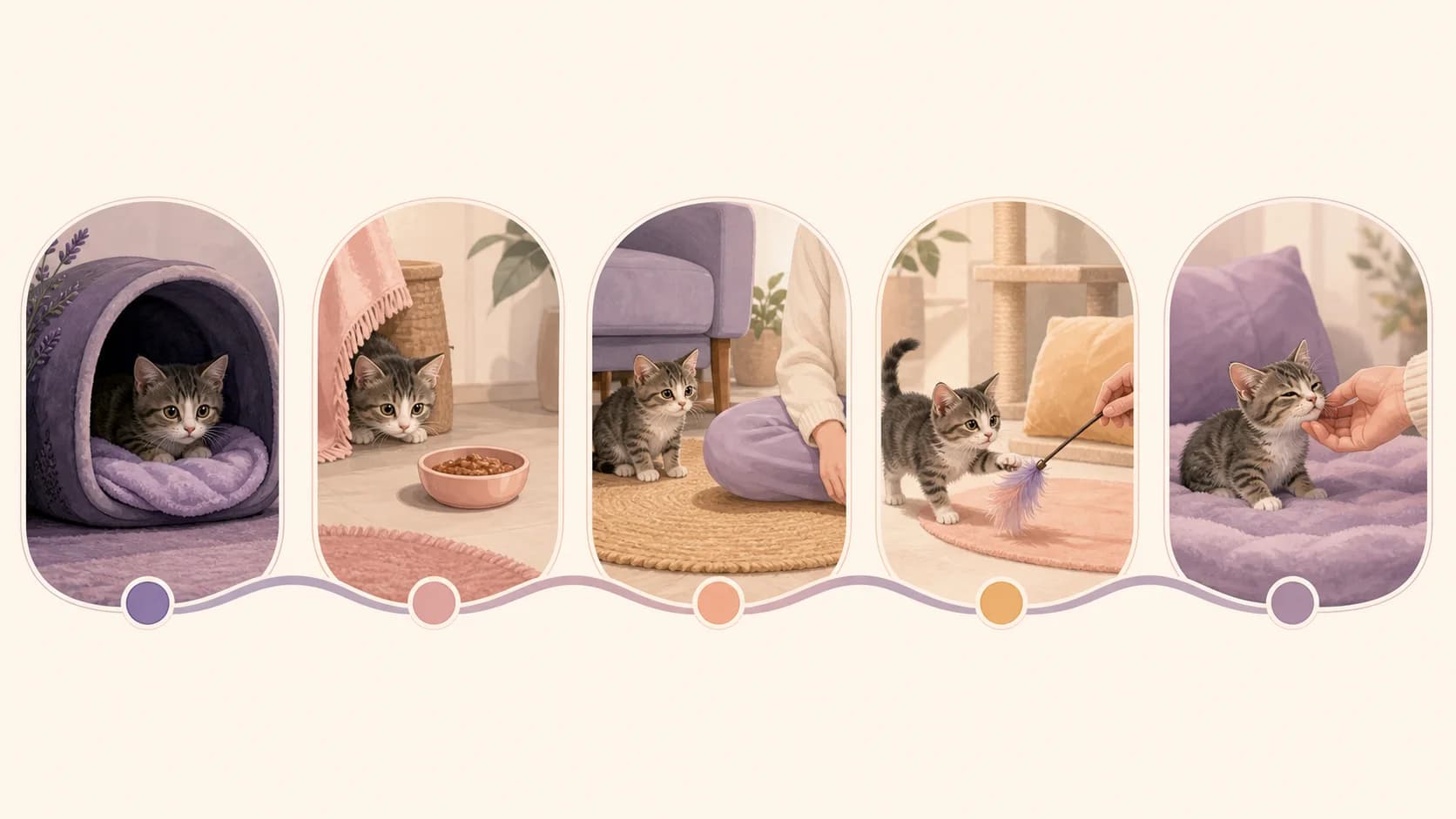
- Create safety
- Build positive associations
- Reduce distance
- Invite voluntary interaction
- Introduce touch gradually
Stage 1 — Let your kitten feel safe around you
Spend calm time nearby without asking for anything. Sit on the floor, read softly, or work quietly while allowing the kitten to observe you. Avoid direct staring, looming over them, or reaching into the hiding space.
Predictability matters. Enter at similar times, move slowly, and use a gentle voice. If the kitten retreats or freezes, make your presence smaller and give them time. The goal is simply: you are nearby, and nothing bad happens.
Stage 2 — Build positive associations with food
Food can help a kitten connect your presence with good things. Start by placing meals where the kitten can eat comfortably, then sit at a respectful distance. Over repeated sessions, decrease the distance only when their body language stays relaxed and their appetite remains normal.
Treats can be useful, but they are feedback—not leverage. If a kitten will only eat after you leave, that is useful information: increase the distance again and give them more time.
Stage 3 — Reduce distance gradually
Move closer in small increments. Watch for soft eyes, normal breathing, eating, grooming, or curiosity. Signs such as flattened ears, a low tense body, a hard stare, or quick retreat mean the step was too large.
Let voluntary proximity do the teaching. A kitten who takes one step toward you has learned more than a kitten who was cornered into staying close.
Stage 4 — Introduce play and voluntary interaction
Wand toys are often a low-pressure bridge because the kitten can interact while keeping comfortable distance. Move the toy away from the kitten rather than directly toward them, and let them choose whether to join in.
Keep play sessions short and end while the kitten is still coping well. Play can make people feel less predictable in a good way: they become part of an activity the kitten can control.
Stage 5 — Introduce touch
Touch comes after the kitten is consistently comfortable near you, not before. Look for voluntary approaches, relaxed posture, and interest in staying close. Offer a hand low and still; if the kitten chooses to investigate, begin with an extremely brief touch where they seem comfortable, then stop.
Avoid grabbing, holding, or restraining a kitten as a socialization strategy. Ending a first touch before the kitten needs to escape helps keep the next one easier.
Signs you're moving too quickly
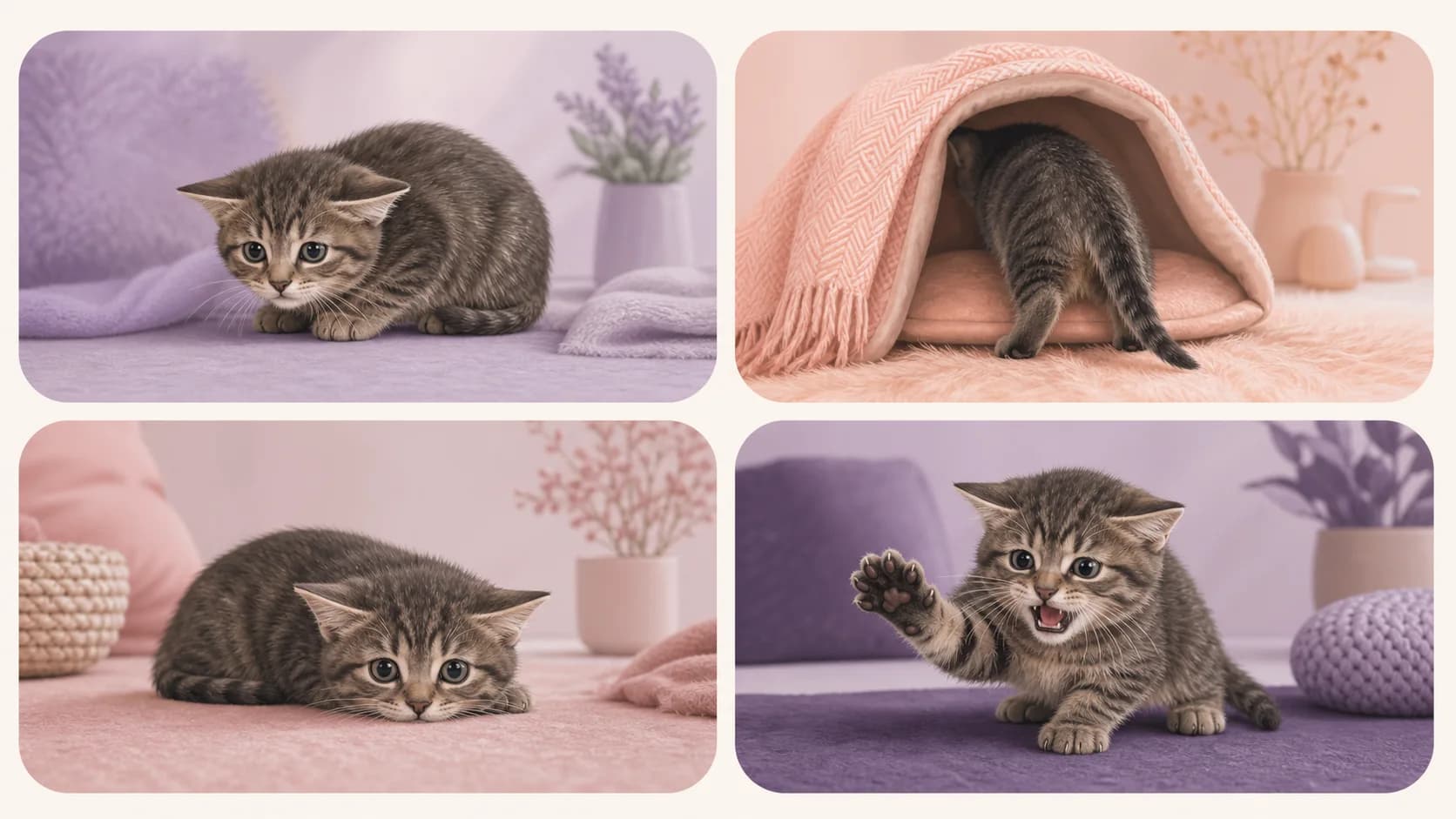
One signal does not mean failure. It does mean it is worth pausing and making the next interaction easier.
- Prolonged hiding or repeated retreat
- Flattened ears, freezing, defensive hissing, or swatting
- Reduced appetite around socialization sessions
- Avoiding a place that has become associated with interaction
- Body language that becomes tense instead of curious
Return to the last step that felt manageable. Trust grows through recovery, too.
How long does it take to socialize a feral kitten?
There is no honest universal timeline. Some kittens show curiosity quickly; others need many quiet repetitions before they can relax around people. Age, human exposure, temperament, health, environment, consistency, and the amount of choice they have all matter.
Focus on milestones instead of deadlines: eating calmly while you sit nearby, watching you without freezing, joining a play session, or choosing to approach. These small changes add up. For the same steady approach with a shy companion cat, see how to get a cat to trust you.
Common mistakes
- Forcing physical contact, chasing, or cornering a fearful kitten
- Overwhelming them with visitors or noisy activity
- Moving stages quickly because one session went well
- Using food pressure without paying attention to stress
- Punishing hissing or interpreting it as defiance
- Assuming progress will be perfectly linear
When in doubt, slow down. A gentler pace is often the fastest way to earn durable trust.
When to involve a veterinarian or qualified behavior professional
Sudden or severe behavior changes can be related to pain, illness, or stress. Contact a veterinarian promptly if a kitten is not eating, appears injured or unwell, or shows a sharp change in behavior. A qualified feline behavior professional can also help you build a plan for difficult or stalled cases.
Mewntor is educational support, not veterinary diagnosis or emergency care.
Frequently asked questions
Can a feral kitten become affectionate?
Many kittens become comfortable and affectionate with patient, consistent care. Their relationship style can differ from cat to cat, so let trust—not a particular outcome—guide the pace.
What age is easiest for socializing a feral kitten?
Earlier socialization is often easier, but age is only one factor. A kitten's history, health, environment, and individual temperament all matter.
Should I pick up a feral kitten to socialize them?
Avoid picking up or restraining a fearful kitten just to speed up socialization. Wait for signs of comfort, offer choice, and keep early touches brief and voluntary.
Is hissing normal during socialization?
Yes. Hissing is often a request for more space, not a sign that the kitten is bad or failing. Pause, reduce intensity, and return to a step they can handle.
How do I know when a feral kitten trusts me?
Look for small voluntary choices: eating while you are nearby, relaxed posture, curiosity, playing in your presence, or choosing to approach you.
Should I let a feral kitten hide?
Yes. A safe hiding place helps a kitten regulate stress. Avoid pulling them out; instead, make the space around the refuge calm and predictable.
How long should socialization sessions be?
Keep sessions short enough that the kitten can finish calm. Several brief, predictable moments are usually more helpful than one long, overwhelming interaction.
Can an older feral cat still be socialized?
Older cats can learn that people are safe, though it may take more time and their ideal relationship may include more distance. A veterinarian or qualified behavior professional can help with a tailored plan.
Looking for a softer starting point? Meet Mewntor and build trust with your cat one manageable moment at a time.