Approach and distance guide
Why Does My Cat Run Away From Me?
Running away does not necessarily mean your cat dislikes you. It often means the approach, distance, or expectation feels too intense right now. Your best next move is usually to stop, give space, and make the next interaction easier.
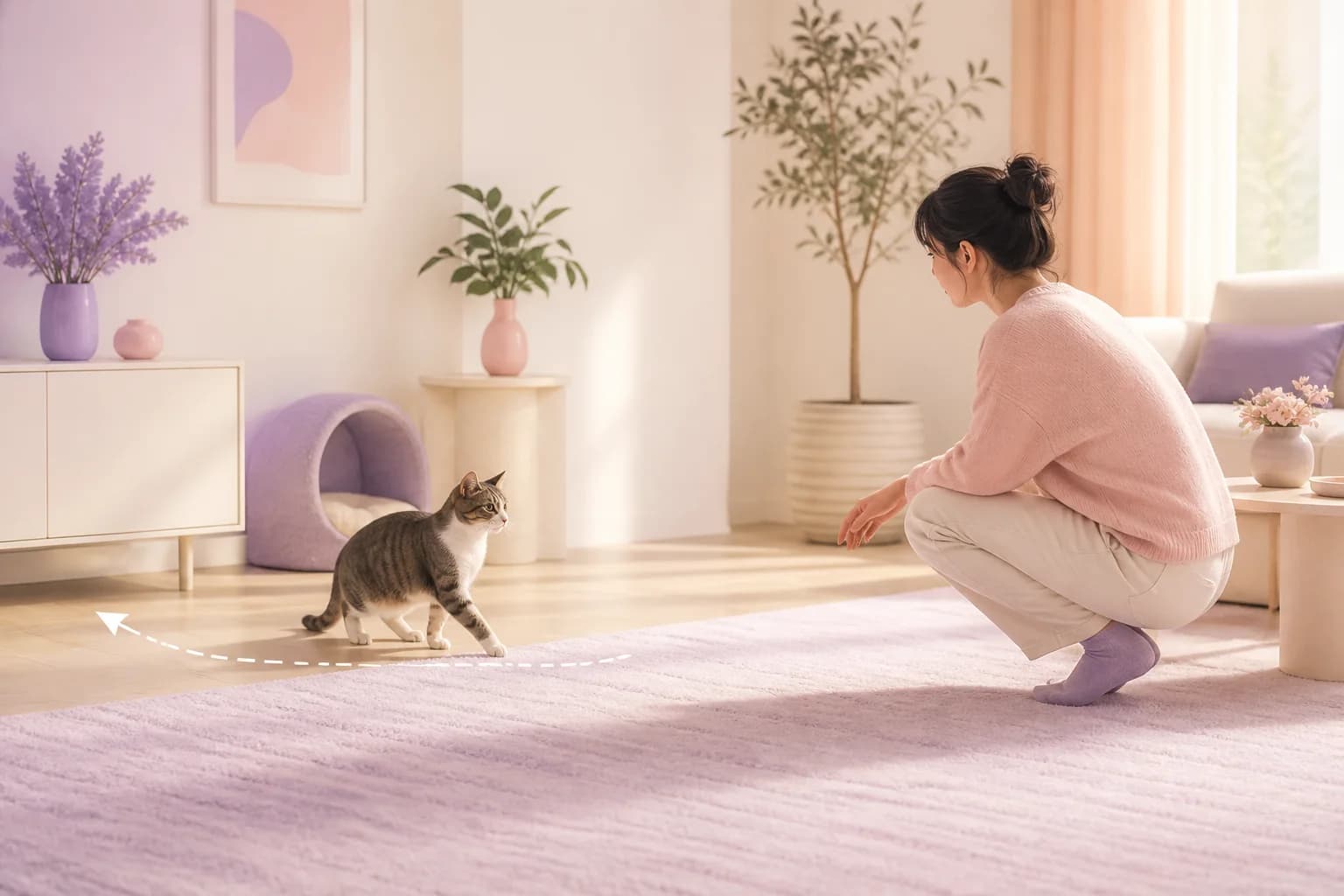
Running away does not necessarily mean your cat dislikes you
Retreat is a useful choice. A cat may leave because they want a quieter interaction, because they expect handling, or because they are still learning that people are safe. The goal is not to stop every retreat; it is to avoid making closeness feel like a trap.
Common reasons cats retreat from people
- You are approaching too directly. Walking straight toward a cat or reaching over them can feel intense.
- Movement feels unpredictable. Sudden motion, loud voices, or fast hands can trigger distance.
- Approach leads to handling. A cat who expects pickup, petting, or restraint may leave early.
- The home offers too little control. Few hiding spots or blocked exits make avoidance more urgent.
- The cat is still adjusting. A new cat may need to observe before they are ready to share space.
- Pain or discomfort has changed behavior. Sudden avoidance needs veterinary attention.
What to do when your cat runs away
1. Stop following the cat
Let the retreat end the interaction. Following can confirm that the cat was right to leave quickly next time.
2. Change how you approach
Move more slowly, turn slightly sideways, and pause before you reach the edge of your cat's comfort zone. Sit down if that makes your profile feel smaller.
3. Work at the comfortable distance
Spend time nearby without asking for touch. Quiet company, food at a safe distance, and a wand toy can be enough.
4. Reward voluntary proximity
If your cat stays, looks at you softly, or comes closer, keep your response gentle. Let them leave whenever they choose.
5. Practice short, predictable interactions
Several easy moments are more useful than a long interaction that ends in escape.
How to tell whether distance is improving
Progress can look like a shorter retreat, a cat who watches instead of leaving, normal eating while you are nearby, play, or an approach they initiate. Do not treat one good interaction as a reason to close the gap quickly. Let repeated comfort set the pace.
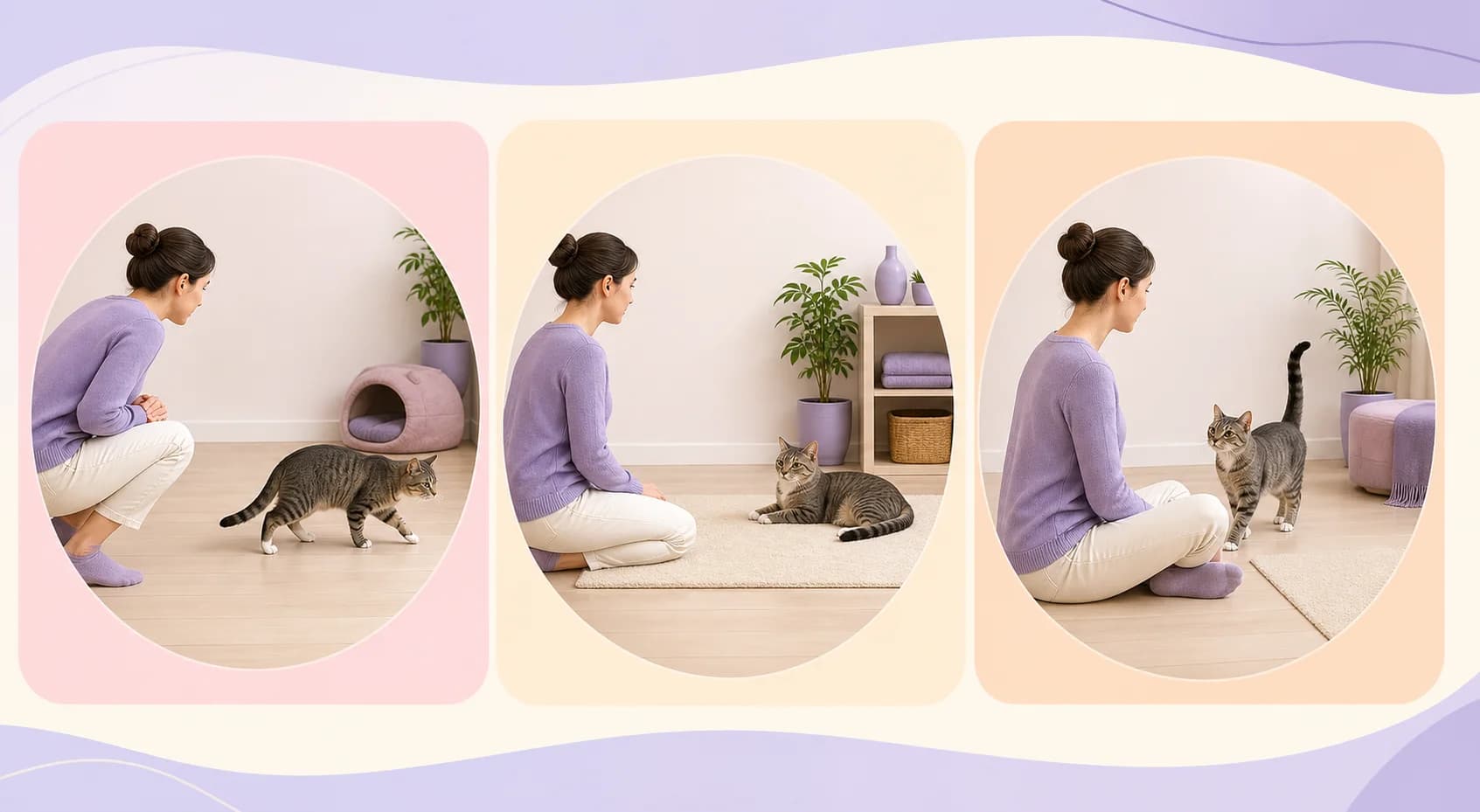
- Too close: retreat
- Comfortable: stays
- Safe: watches
- Curious: approaches
- Ready: interacts
Why a new cat may hide after running away
Recently adopted cats often retreat into a refuge after a social moment. That can be a normal part of adjustment, not a setback. See what to do when a new cat is hiding to make that refuge useful rather than something to remove.
How to build long-term trust
Trust grows when your cat sees that you notice their boundaries. Pair your presence with meals, play, and calm routines; then let voluntary proximity do the teaching. Our guide to getting a cat to trust you gives a complete step-by-step approach.
If retreat is paired with hiding, freezing, hissing, or strong tension, the issue may be broader fear. Read why your cat may be scared of you and consider a veterinarian for sudden changes.
How socialization can help
Socialization is the larger process of helping a cat cope with people and experiences through safety, predictability, positive associations, choice, and gradual interaction. The cat socialization guide explains how these principles fit together.
When to seek professional help
Contact a veterinarian if avoidance is sudden, your cat is not eating, appears painful, or seems unwell. A qualified feline behavior professional can support severe fear or a situation that is not improving despite a calmer setup.
Frequently asked questions
Should I walk toward my cat to get them used to me?
Not if the cat repeatedly retreats. Start farther away and let your cat choose whether to reduce distance.
Why does my cat run away after being petted?
They may have reached their comfort limit or learned that petting continues longer than they want. Keep touch brief and stop earlier next time.
Can a cat learn not to run away?
Many cats become more comfortable when approaching no longer predicts pressure. Aim for voluntary proximity rather than teaching a cat to tolerate being cornered.