New-cat adjustment guide
New Cat Hiding: What Should You Do?
Hiding is often how a new cat manages an unfamiliar home. Instead of trying to pull them out, make their refuge predictable and let safety come before proximity, play, or touch.

Is it normal for a new cat to hide?
Often, yes. A new home can bring unfamiliar sounds, scents, rooms, and people all at once. Hiding gives a cat a way to lower the amount of information they need to process. It does not mean they are rejecting you or that the adoption is going badly.
What matters is whether your cat has access to essentials and begins to show small signs of settling: eating, using the litter box, observing, exploring when the home is quiet, or recovering after a surprise.
Why hiding can make a cat feel safer
For a cautious cat, a covered bed, open carrier, or box provides a protected view of the room. A refuge with a clear exit lets them choose when to observe and when to retreat. Taking that option away can make the cat feel more trapped, not more social.
Set up a predictable refuge
Start in a calm room if you can. Keep food, water, and litter reliably available, but avoid placing litter right beside food. Offer at least one covered hiding place with an easy exit, reduce loud activity, and keep visitors to a minimum at first.
Do not put your hand into the hiding area to practice touch. Spend quiet time nearby instead: read, work softly, or sit on the floor without staring. That low-pressure presence is part of how cat socialization works.
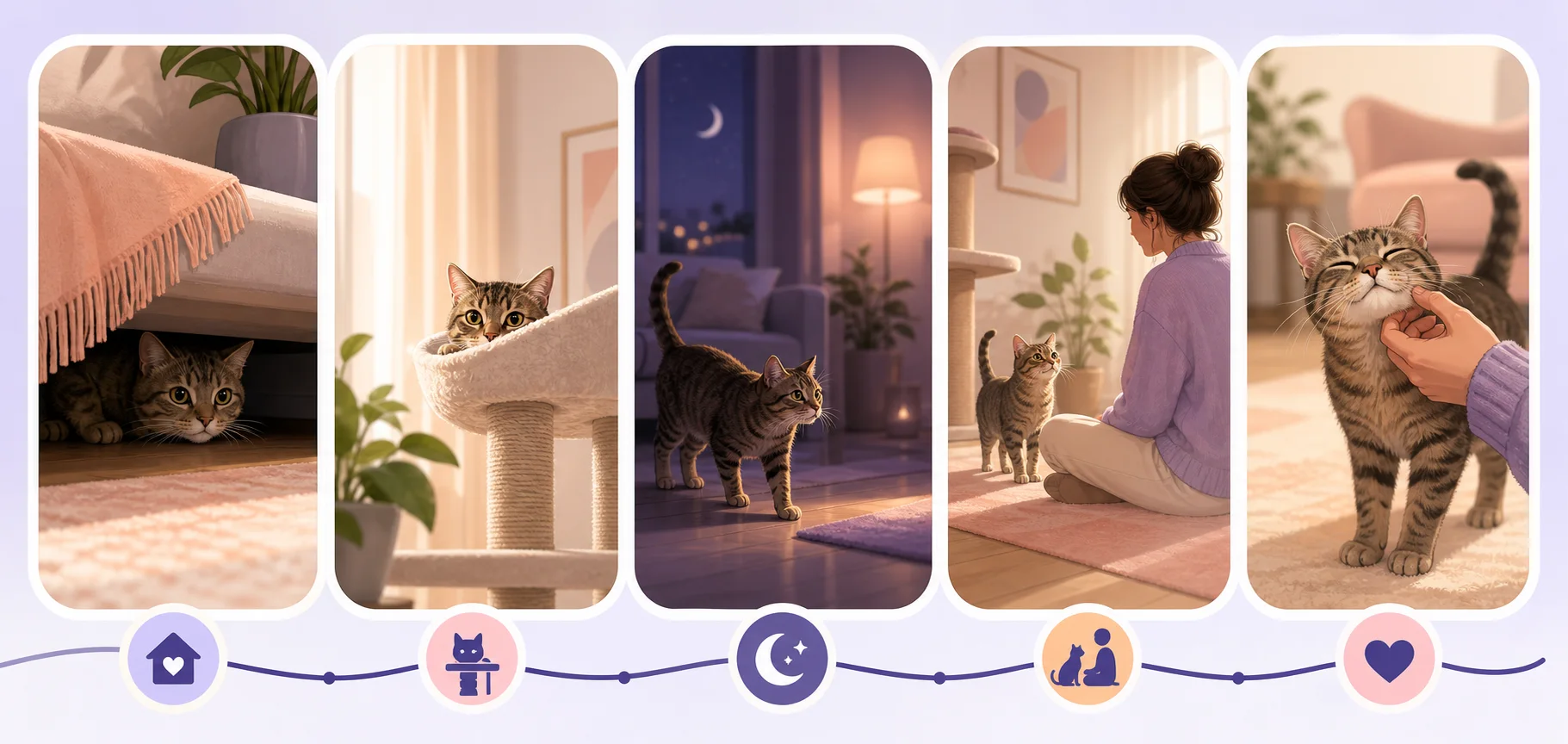
- Hide safely
- Observe
- Explore quietly
- Stay nearby
- Choose interaction
Should you pull a new cat out of hiding?
Usually, no. Pulling a cat out can teach them that a hiding spot is not safe and that people remove their choices. There are exceptions for urgent safety or medical care, but everyday socialization works better when your cat is allowed to emerge on their own.
How to use food and play without pressure
Place meals where your cat can eat comfortably, then sit at a distance. If they wait until you leave, make the distance larger next time. Try a wand toy only if your cat is showing curiosity; move it away from them and allow them to opt out.
Once you understand their comfortable distance, use the step-by-step approach in our guide to getting a cat to trust you.
What if the cat comes out only at night?
Nighttime exploration is common when the home is quieter. Avoid treating it as a problem. Leave a predictable environment, notice food and litter use, and keep daytime visits calm. Over time, many cats extend their exploration into quieter parts of the day.
What if your new cat runs away when you enter?
Pause at the doorway or sit farther away rather than following. A cat who retreats may be reacting to the approach itself, not refusing connection. Our guide to why cats run away from people explains how to stop at a more comfortable distance.
For a newly rescued kitten with minimal human contact, start with the more specialized feral-kitten socialization guide.
When hiding may need veterinary attention
Contact a veterinarian if your cat is not eating, seems ill or injured, has sudden severe behavior changes, or is not using the litter box normally. Mewntor is educational support, not veterinary diagnosis or emergency care.
Frequently asked questions
How long will my new cat hide?
The timeline varies. Look for small signs of adjustment rather than a deadline, and keep the setup calm and consistent.
Can I sit with my cat while they hide?
Yes, if you stay at a distance that lets them remain settled. Quiet company can be useful when it does not demand interaction.
Should I block the hiding place?
Usually no. Offer a safer alternative only if the spot is dangerous or inaccessible for necessary care.